Why Every Customer Loves Customized Products (And How to Sell Them)
Learn how to use AI and 3D printing to offer unique, personalized items like custom rubber ducks that set your business apart from traditional manufacturing.
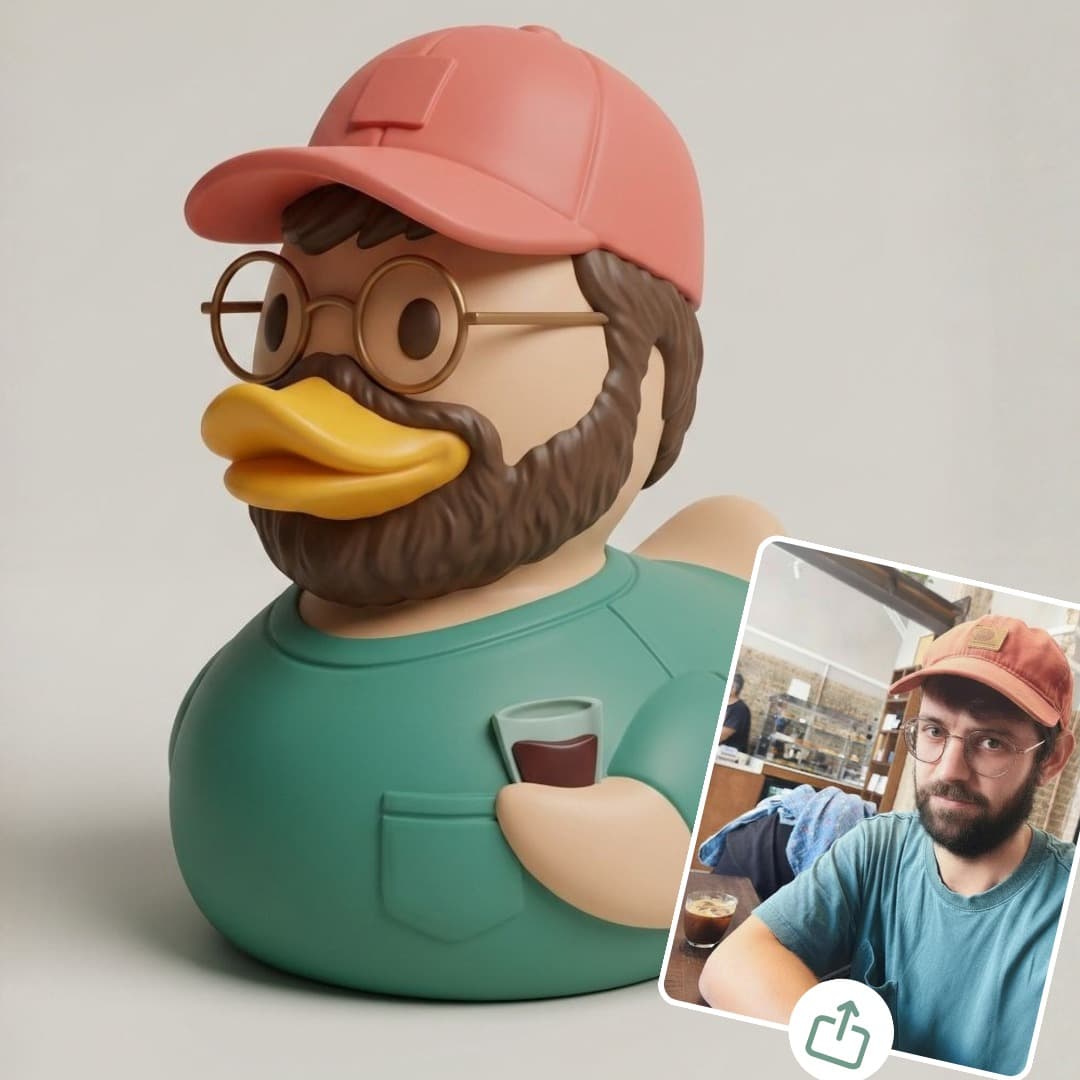
Every 3D printing shop owner needs to know that a customer loves customized products because personalization adds immense emotional value. Unlike mass manufacturing, 3D printing easily handles one-off designs. By offering unique, photo-based creations, you attract dedicated buyers and effortlessly stand out in a competitive marketplace.
In today's saturated e-commerce landscape, standing out is the biggest hurdle for new and established 3D printing businesses alike. Selling the same generic articulated dragons or standard vases as a hundred other shops often leads to a race to the bottom in pricing. To build a highly profitable, sustainable business, you must offer something your competitors cannot easily replicate.
The Incredible Advantage of 3D Printing Over Traditional Manufacturing
The traditional manufacturing industry relies on economies of scale. Injection molding, for example, requires tens of thousands of dollars just to create a single metal mold. This means factories have to produce thousands of identical units to become profitable. Traditional manufacturers simply cannot afford to pause their assembly lines to create a single, highly personalized product for an individual.
This is precisely where 3D printing fundamentally changes the game. Your 3D printer does not care if it prints 100 identical items or 100 completely unique items. The setup time and tooling costs are exactly the same: zero. This agility allows small creators to operate profitably in a space that massive corporations are structurally unable to touch: true mass customization.
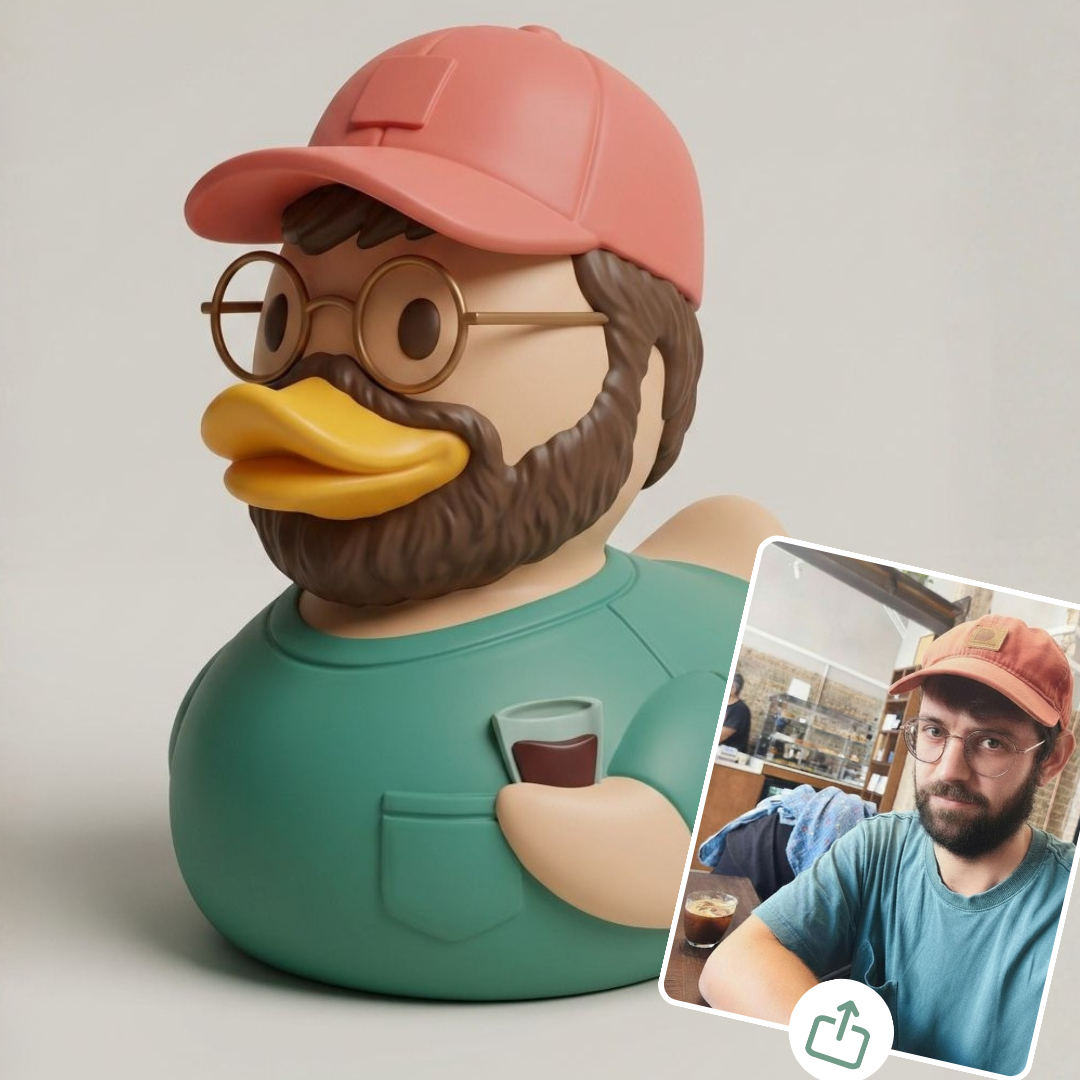
Personal Deep Duck:
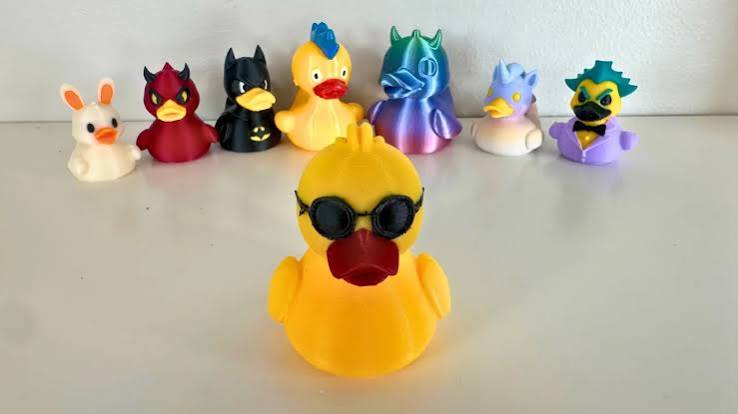
Regular jeep ducks:
Is It True That Every Customer Loves Customized Products?
Yes, data consistently shows that a customer loves customized products because they feel seen and valued as individuals. When a buyer can turn their personal photo into a physical object, they form an emotional connection. This unique attachment justifies premium pricing and builds deep, long-lasting brand loyalty.
Consumer psychology heavily favors products that reflect individual identity. When a shopper browses an online store, generic items might catch their eye, but a product that can be tailored to feature their own face, their pet, or a loved one stops them in their tracks. According to consumer insights from Shopify, buyers are willing to pay up to a 20% premium for personalized products compared to non-customized equivalents.
Furthermore, customized products naturally lend themselves to viral marketing. A customer who receives a 3D printed rubber duck that looks exactly like their grumpy uncle is almost guaranteed to post a picture of it on social media. This organic sharing acts as powerful, free advertising for your print shop, driving more traffic to your custom listings.
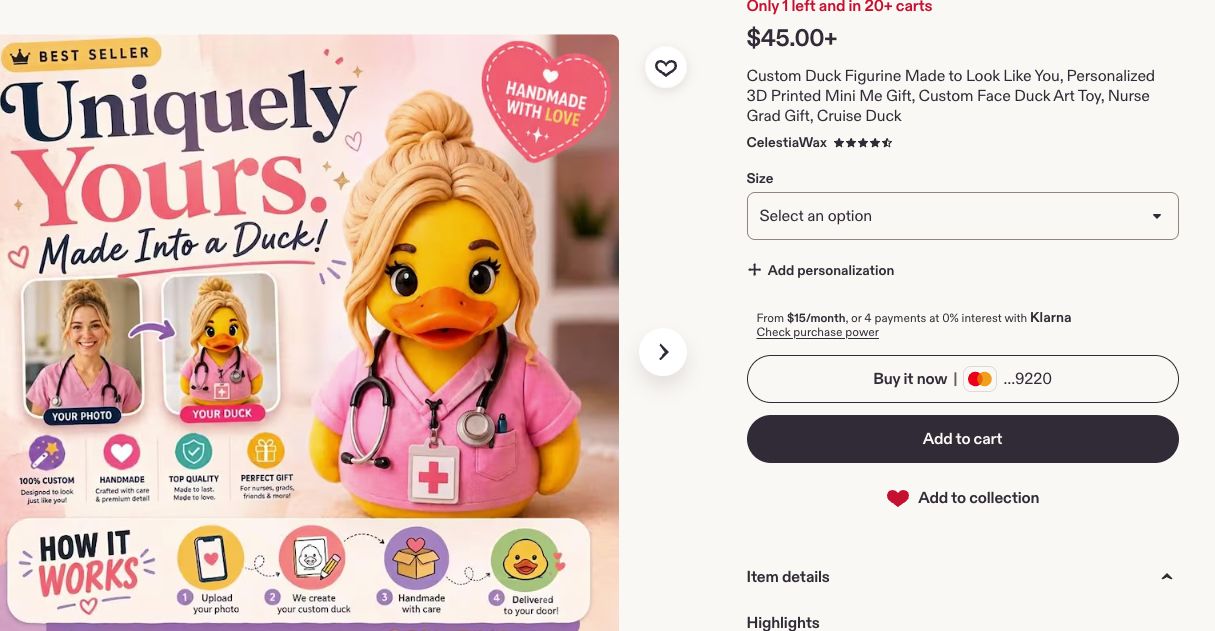
How to Stand Out: The Custom Rubber Duck Strategy
Knowing that personalization sells is only half the battle; executing it profitably is the real challenge. Historically, offering custom 3D models meant you had to hire a digital sculptor or spend hours in ZBrush or Blender for every single order. This completely killed the profit margin. However, the rise of AI modeling has changed the math entirely.
Imagine setting up a listing in your Etsy or Shopify store titled "Custom Photo Rubber Duck - We Make a Duck That Looks Like You!" The premise is brilliantly simple for the user. They buy the item and attach a front-facing photo of themselves, a friend, or even a pet. This is an incredibly popular gift item, especially for communities like Jeep owners who love "ducking" each other.
To learn more about the specific appeal of this product in niche communities, check out our guide on Meet Your New Jeep Ducks Maker: 3D Print Custom Rubber Ducks.
- Create Your Store ListingSet up a product page highlighting the custom nature of the duck. Clearly instruct customers to upload a high-quality, front-facing photo after checkout.
- Receive the Order and PhotoOnce an order comes in, download the customer's provided image. Review it quickly to ensure there is good lighting and clear visibility of the subject.
- Generate the Model in KishMakeLog into KishMake, navigate to the specific Duck Template, and upload the customer's photo. The AI will process the image and seamlessly blend the facial features onto the 3D duck base.
- Download and SliceDownload the generated print-ready STL file. Import it into your favorite slicer (like Cura or PrusaSlicer), check your supports, and generate the G-code.
- Print and ShipSend the file to your 3D printer. Once finished, perform any necessary post-processing, package it beautifully, and ship it to a very excited customer.

Streamlining Production with AI Templates
The secret to making this strategy work at scale is the use of pre-defined AI templates. By using a platform that constrains the AI generation to a specific base shape (like a rubber duck), you guarantee that the final model will be easily 3D printable without needing manual digital repair. The base of the model remains flat for easy bed adhesion, while only the top features are customized.
If you are curious about how this template system streamlines the workflow for print shop owners, read our deep dive: Introducing Templates: Your Shortcut to PrintReady 3D Models. This technology eliminates the unpredictability of raw AI generation, ensuring you get a solid, manifold mesh every single time.
Business Metric | Selling Generic Prints | Selling Custom AI Prints |
|---|---|---|
Profit Margin | Low (High competition) | High (Premium pricing) |
Design Time | Zero (Pre-downloaded) | ~2-3 Minutes (AI Generation) |
Customer Loyalty | Transactional | Highly Emotional / Viral |
Market Saturation | Extremely High | Very Low |
Expanding Your Catalog Beyond Ducks
Once you have successfully implemented the custom duck workflow, you can easily replicate this success across different niches. The core principle remains identical: the customer provides a photo or text, and you use an AI template to generate a unique physical product.
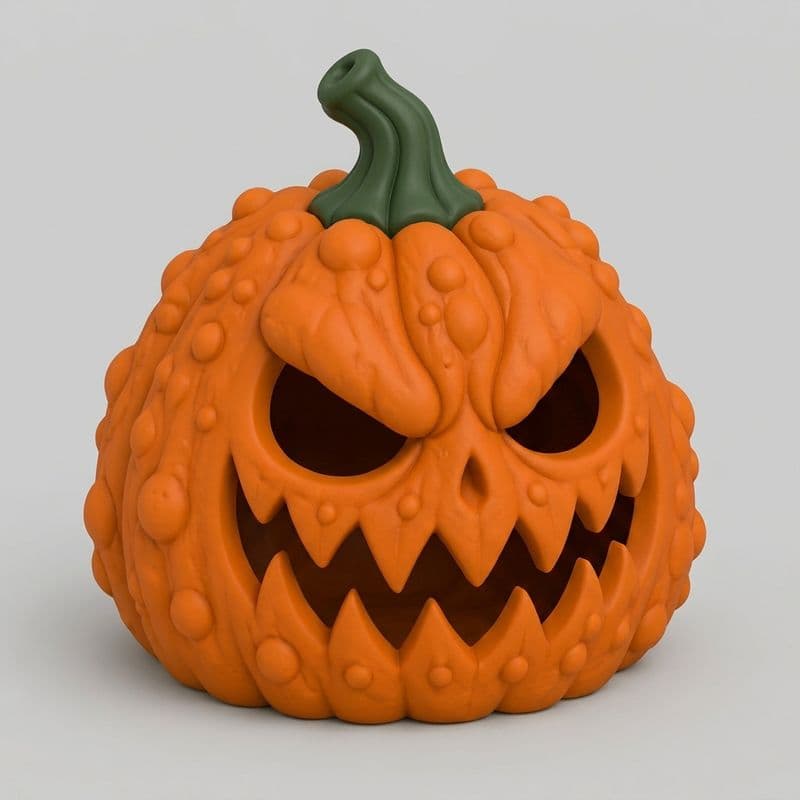
For example, during the fall season, offering personalized Halloween decor is a massive revenue driver. You could transition your strategy to offer customized jack-o'-lanterns featuring the customer's face. For a full breakdown on that specific product line, check out The Ultimate AI Pumpkin Maker Guide for 3D Printing. Other excellent personalized products include custom candle holders, unique chess pieces, and bespoke fidget toys.
Marketing Your Custom 3D Printed Goods
Having the ability to create customized products is a massive advantage, but you must market them effectively. Your product photos should heavily emphasize the 'Before and After' effect. Show the 2D photo the customer uploaded right next to the finished, customized 3D printed duck. This visual immediately communicates the value proposition to a potential buyer.
Additionally, consider offering volume discounts for customized items. A customer might want to order ten custom ducks featuring the face of the groom for a bachelor party, or an office manager might want ducks for their entire team. Because the AI generation takes mere minutes, scaling up an order like this provides incredible margins for your 3D printing business.
Start Selling Customized Products Today
The era of competing solely on printer speed or cheap filament is over. To thrive as a modern maker, you have to offer an experience and a product that feels magical to the end consumer. Bridging the gap between a customer's personal photos and a physical object delivered to their door is exactly that kind of magic.
By leveraging AI tools like KishMake, you remove the technical barrier of 3D modeling, allowing you to focus entirely on marketing and printing. Stop competing with mass manufacturers on their terms. Embrace the agility of 3D printing, start offering photo-based customized goods, and watch your business grow through the power of personalization.
Frequently asked questions
How do I price custom 3D printed products?
Pricing custom items requires factoring in design time, material, and printing costs. Because these are unique, one-off creations, you can typically charge a premium markup of two to three times the cost of a standard generic item. Customers happily pay more for personalization.
Do I need CAD skills to offer custom designs?
No, you do not need any traditional CAD skills. By utilizing AI-powered platforms like KishMake, you simply upload the customer's reference photo into a dedicated template. The software automatically generates a fully print-ready 3D model in just a few minutes.
What types of photos work best for the duck template?
Clear, well-lit, front-facing photos work best for generating accurate custom models. Encourage your customers to upload high-resolution images with contrasting backgrounds. This ensures the AI can accurately capture facial features and specific details when transferring them onto the rubber duck base.
How long does it take to process a custom order?
Processing time is remarkably fast with AI tools. Generating the 3D model takes only a few minutes from the time you upload the photo. Depending on your printer's speed and the chosen infill settings, the actual printing process typically takes a few hours.
Related reading
Run a 3D-print store? Embed KishMake into your site.
Join the API waitlist for early access to design-on-demand for your customers.
